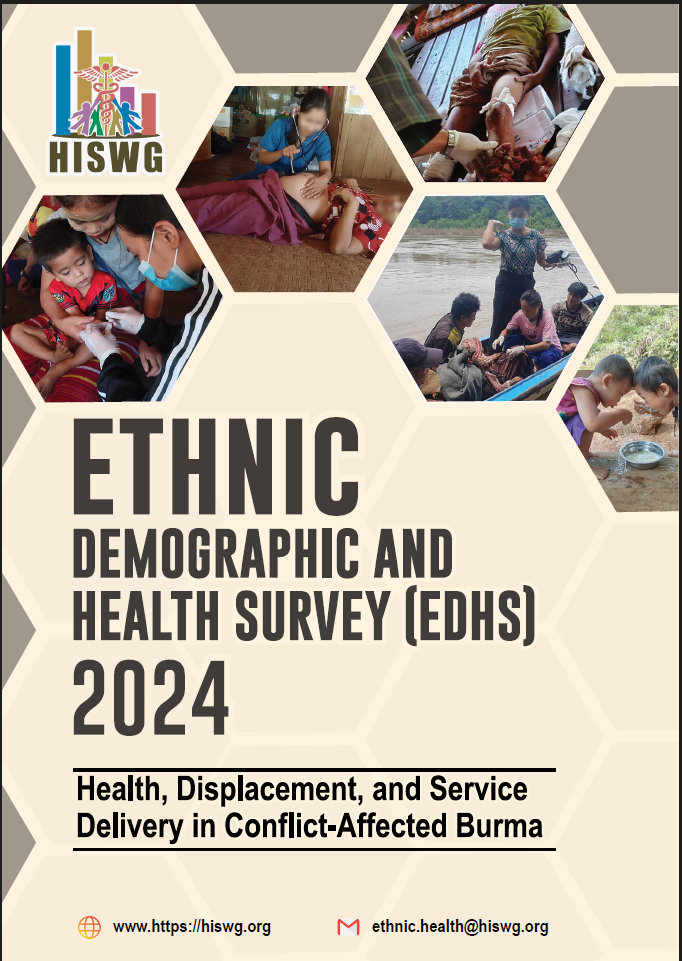
The 2024 EDHS presents the most comprehensive, population-based assessment of health, well-being, and service access in Burma’s ethnic areas since the 2021 military coup. Covering 3,100+ households and 15,000 individuals, the survey sheds light on how underserved communities are coping with economic hardship, conflict, and rising health needs.
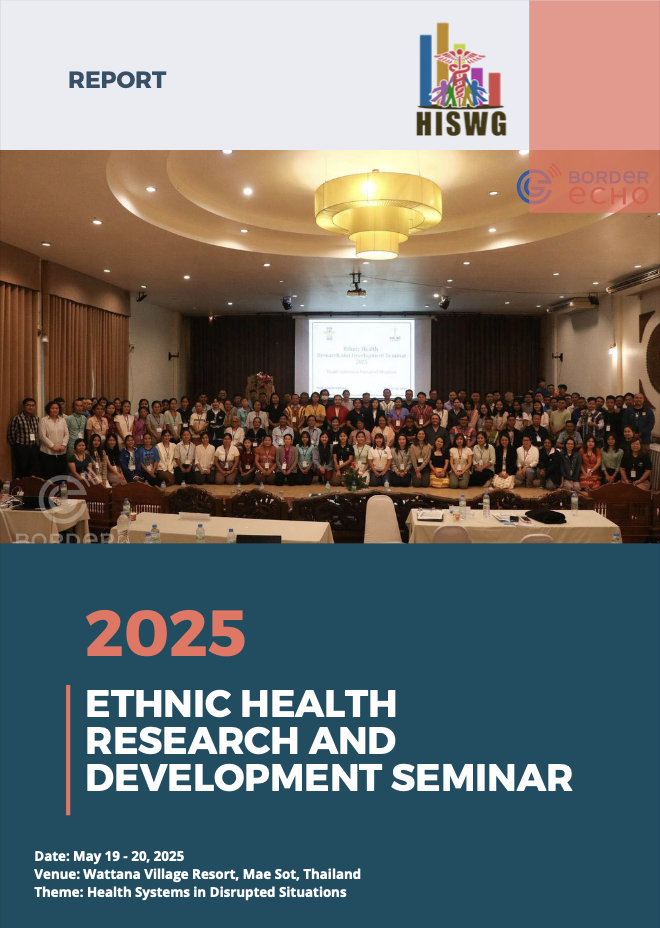
The 2025 Ethnic Health Research and Development Seminar held at Mae Sot, Thailand, focused on addressing health system challenges in conflict-affected and disrupted areas along the Thailand-Myanmar border. The seminar brought together over 170 participants from ethnic health organizations, NGOs, universities, and health professionals to share research on topics such as healthcare delivery, nutrition, emergency care, and cross-border collaboration. Key issues discussed included the impacts of political instability, weak health infrastructure, and limited access to services for displaced populations.
This report illustrates the crucial role played by ethnic and community-based health organizations (ECBHOs) in delivering healthcare to remote, conflict-affected areas of Eastern Burma. Based on the 2019 Eastern Burma Retrospective Mortality Survey (EBRMS), which covered nearly 700,000 people, it highlights improvements in maternal and child health services—including antenatal care, skilled birth attendance, and birth registration—between 2013 and 2019. Despite these gains, over half of children under five remain undocumented, limiting access to essential services. For the first time, the survey also identified rising non-communicable diseases (NCDs) in the region, with limited screening and treatment available. The findings emphasize the growing health inequities and reinforce the importance of expanding ECBHO-led care to meet both infectious and chronic disease challenges.
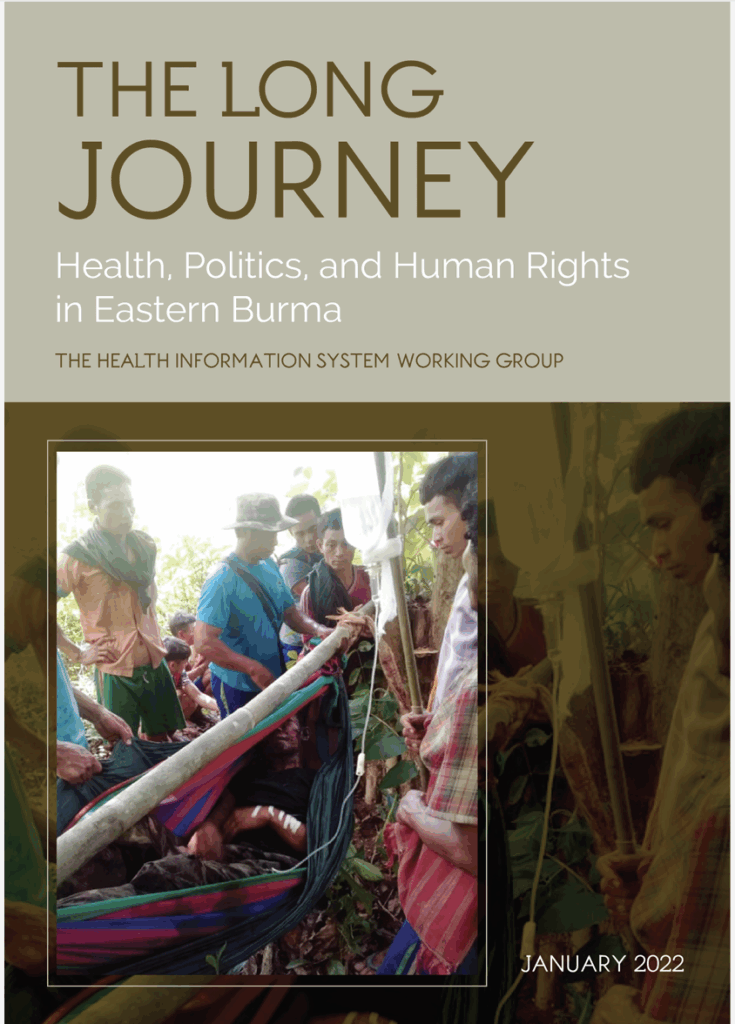
This HISWG-led 2013 survey, spanning 64 townships and 456,786 people, highlights severe health challenges in Eastern Burma’s conflict-affected areas, including high child mortality and preventable diseases like malaria, diarrhea, and respiratory infections. Ethnic and community-based health organizations (ECBHOs) continue to be the main healthcare providers, serving 70% of the population, while only 8% accessed government services. Maternal health has improved, with more births attended by trained personnel and high breastfeeding rates, but acute child malnutrition remains at a critical level (16.8%). Although human rights violations have decreased since 2008, incidents such as forced labor and food seizure still occur and are linked to poor health outcomes. The report calls for stronger support to ECBHOs, formal recognition of their role, and the adoption of decentralized, locally led health governance to improve health access, equity, and long-term peace in Eastern Burma.
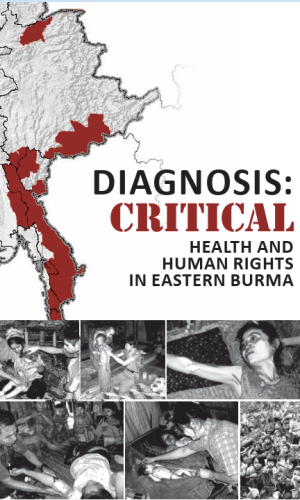
This report highlights findings from a health and human rights survey in 21 conflict-affected townships of eastern Burma. Child and maternal mortality rates far exceed national averages, with preventable diseases like malaria and diarrhea as leading causes of death. Around 30% of households reported human rights abuses, directly impacting health—especially for women and children. In the absence of state services, ethnic and community-based health organizations care for over 376,000 people. Urgent support is needed to sustain their efforts and prevent further health crises and cross-border disease threats.
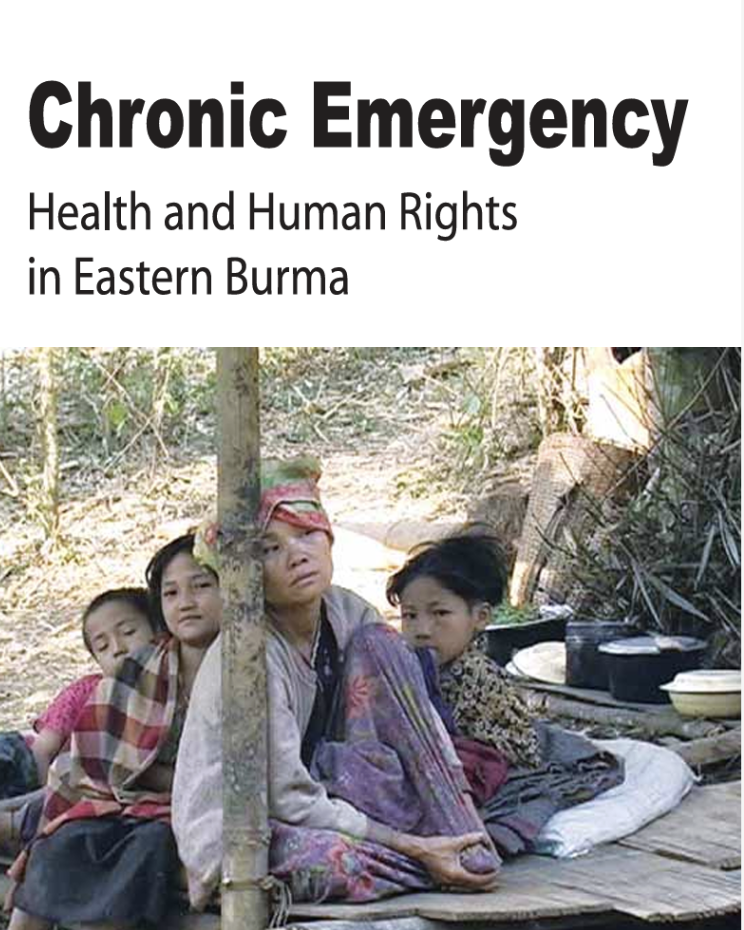
In these eastern areas of Burma, standard public health indicators such as population pyramids, infant mortality rates, child mortality rates, and maternal mortality ratios more closely resemble other countries facing widespread humanitarian disasters, such as Sierra Leone, the Democratic Republic of the Congo, Niger, Angola, and Cambodia shortly after the ouster of the Khmer Rouge. The most common cause of death continues to be malaria, with over 12% of the population at any given time infected with Plasmodium falciparum, the most dangerous form of malaria. One out of every twelve women in this area may lose her life around the time of childbirth, largely preventable deaths. Malnutrition is unacceptably common, with over 15% of children at any time with evidence of at least mild malnutrition, rates far higher than their counterparts who have fled to refugee camps in Thailand. Knowledge of sanitation and safe drinking water use remains low.
The Health Information System Working Group (HISWG) is pleased to present its 2025 Annual Report, highlighting a year of resilience, collaboration, and continued commitment to strengthening health information systems in ethnic and conflict-affected areas of eastern and western Myanmar.
Despite ongoing conflict, displacement and systemic disruption of public health services, HISWG and its partner Ethic Health Organizations (EHOs) sustained essential disease surveillance, strengthened data quality, expanded analytics capacity, and advanced ethical research governance. Read the full report here: