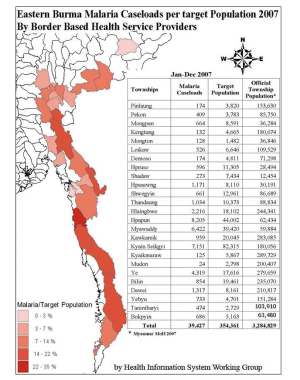
HISWG Caseloads Maps - 2014
The HISWG Caseloads Maps (2014) illustrate the number of treated cases for key diseases in Eastern Burma, relative to the target population in each township. The maps use 2014 official population data from the Myanmar Ministry of Health, although HISWG does not vouch for its accuracy. The focus is on rural areas served by border-based health providers. These visuals do not show disease prevalence or incidence rates, as the data only include treated cases and are not population-based. Therefore, they cannot be used to assess overall morbidity in the region. A high or low caseload per population may reflect disease prevalence or healthcare access—but not necessarily both. The maps exclude townships lacking official population data from MIMU.
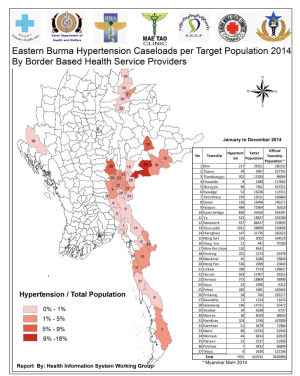
HISWG Caseloads Maps - 2013
The Health Information System Working Group (HISWG) maps and charts present the number of treated cases for major diseases per target population in each township of Eastern Burma, using 2011 population data from the Myanmar Ministry of Health (included without endorsement due to outdatedness). These visuals reflect healthcare service delivery, not disease prevalence or overall morbidity, as they exclude untreated cases and may count individuals multiple times for different illnesses. Caseload figures are influenced by both disease rates and access to care—meaning low caseloads could indicate limited services rather than low disease burden. Data is based on MIMU population figures, and townships without available data are excluded.
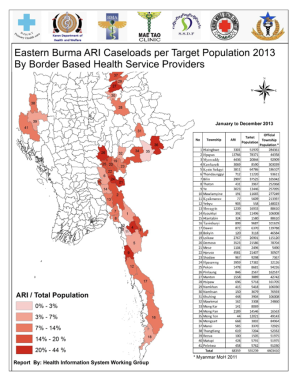
HISWG Caseloads Maps - 2012
The 2012 HISWG maps and charts illustrate the number of treated cases for major diseases per target population across Eastern Burma’s townships, based on 2011 Ministry of Health data. While these visuals reflect the scale of healthcare services provided, they do not represent disease prevalence or overall health status, as they exclude untreated cases and may count individuals multiple times. Low caseloads may indicate either limited service access or low disease levels, while high caseloads may suggest higher disease burden but not full coverage. Most data comes from stable rural areas and should be interpreted with caution.
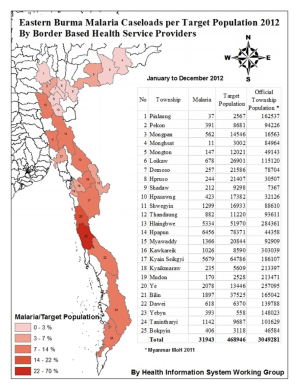
HISWG Caseloads Maps - 2011
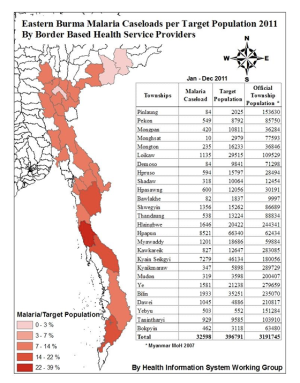
The 2011 HISWG maps and charts illustrate the number of treated cases for major diseases per target population in each township of Eastern Burma, based on 2007 Ministry of Health data (used without endorsement due to its age). These figures reflect the scale of healthcare service provision, not disease prevalence or overall morbidity, as they exclude untreated cases and may count individuals multiple times. Caseload data must be interpreted with caution—low numbers may indicate limited access rather than low disease rates, while high numbers may still miss untreated cases. The data mainly covers stable rural areas and should not be used to assess the broader population’s health.
HISWG Caseloads Maps - 2010
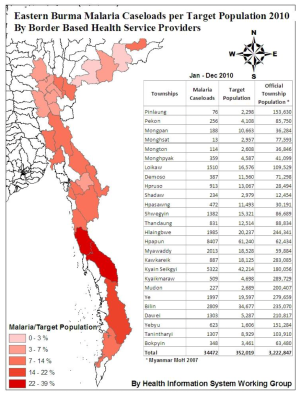
The 2010 mapping of Eastern Burma caseloads presents the number of disease cases treated by border-based health service providers, relative to target population sizes in each township. The data, based on 2007 Ministry of Health population figures, reflects service provision—not disease prevalence or incidence—since untreated cases and full population data are not included. Caseloads vary due to both disease prevalence and service coverage, so high or low case numbers per population do not directly indicate the level of healthcare access or disease burden.
HISWG Caseloads Maps - 2009
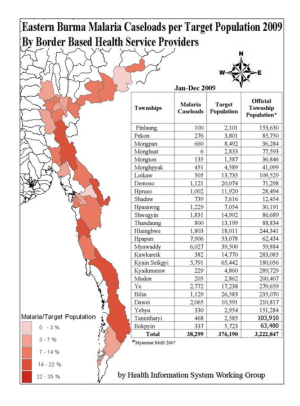
The 2009 HISWG maps and charts present the number of treated cases for major diseases per target population in each township of Eastern Burma, using 2007 official population data from the Myanmar Ministry of Health (included without endorsement due to the lack of updated figures). These visuals reflect the scale of healthcare service provision but do not represent disease prevalence or overall morbidity, as they include only treated cases and may count individuals more than once. Caseload data should be interpreted with caution—low numbers may indicate either low disease rates or limited access to care, while high numbers may still miss untreated cases. The data focuses on relatively stable rural populations and is not representative of the region as a whole.
HISWG Caseloads Maps - 2008
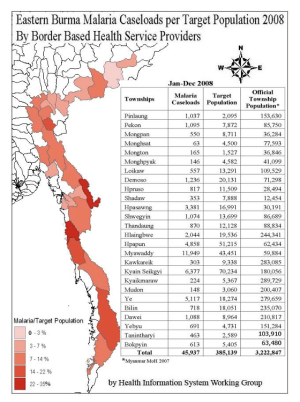
The 2008 HISWG maps and charts show the number of treated cases for major diseases per target population in each township of Eastern Burma, based on 2007 population data from the Myanmar Ministry of Health (used without verification due to the absence of updated figures). These visuals reflect the scope of health service provision, not disease prevalence or overall morbidity, as they include only treated cases and may count individuals more than once. Caseloads should be interpreted cautiously—low numbers may result from limited access to care or genuinely low disease rates, while high numbers may indicate widespread illness but not full treatment coverage. The data primarily represents stable rural areas and is not generalizable to the broader population.
HISWG Caseloads Maps - 2007
The 2007 HISWG maps and charts display the number of treated cases for major diseases per target population in each township of Eastern Burma, using official 2007 population data from the Myanmar Ministry of Health (included without verification due to the lack of updated figures). These visuals reflect the scale of healthcare service provision but do not indicate disease prevalence or overall morbidity, as they include only treated cases and may count individuals multiple times. Caseloads should be interpreted with caution—low numbers may result from limited access to care or genuinely low disease rates, while high numbers may signal a greater burden of illness but not full treatment coverage. The data primarily represents stable rural areas and should not be generalized to the wider population.